Solution addressing agricultural water pollution wins Dutch CASSINI Hackathon in Noordwijk
- HACKATHONS
Kacia Rutkoŭskaja
- 0
- 8 minutes read

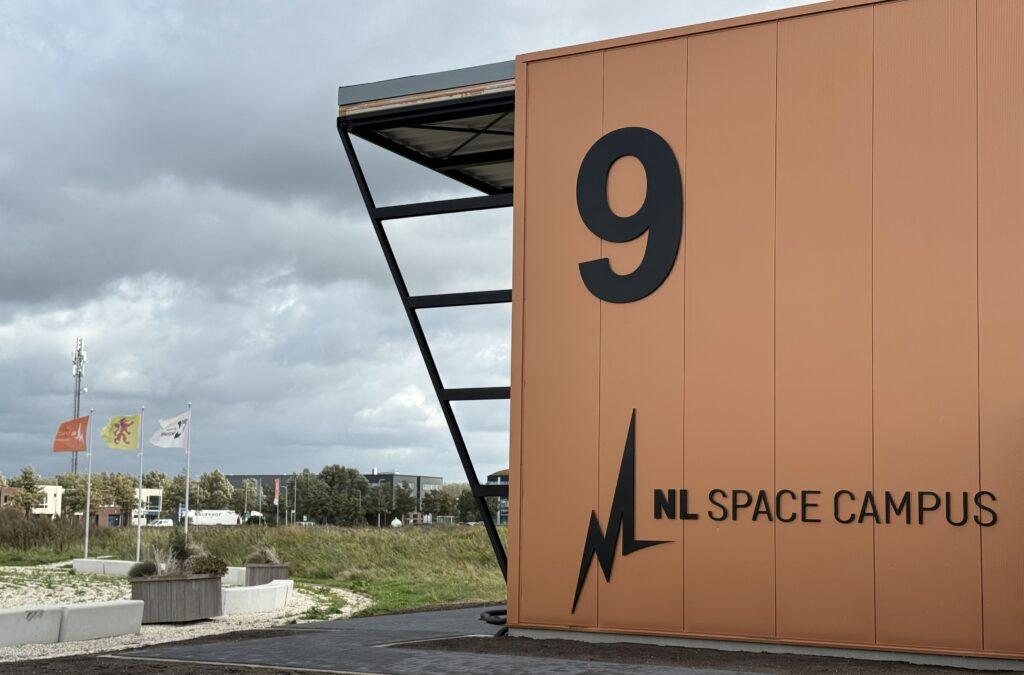
The solution addressing agricultural water pollution caused by nutrient runoff has won the Dutch edition of the 11th CASSINI Hackathon, held from 24 to 26 April at the CometLab, NL Space Campus in Noordwijk. Developed by team Solum, the project uses satellite data and geospatial analysis to identify areas at risk of nutrient runoff from manure and support more targeted monitoring, with clear relevance for the Dutch water and infrastructure context.

The winning concept enables authorities to identify high-risk areas where pollution is likely to occur. By combining satellite data with environmental indicators, it supports more targeted inspections and earlier intervention, offering a clear pathway from data to application.
“I come from an area with a lot of farming activity, so I am familiar with the challenge,” said Thomas Rosendaal, a master’s student in Computer and Embedded Systems Engineering at TU Delft and a member of team Solum, which consists of students and graduates from TU Eindhoven.
Learn more about the winning project
During the three-day hackathon, teams of students, developers, researchers, and entrepreneurs developed, prototyped, and pitched ideas addressing water-related challenges using satellite data from European programmes alongside Dutch data sources.
Participants worked on three core challenges: improving equitable and efficient access to water, tracking and preventing water pollution, and monitoring disaster risk. These themes reflect ongoing priorities in the Netherlands, where water management plays a central role in infrastructure, agriculture, and public safety.

In addition to the winning team, a second prize was awarded to team Well-D for their work on detecting illegal groundwater extraction, while the third prize, the CometLab award, was given to team Aegis for a disaster response application based on satellite data, providing access to prototyping facilities to further develop their concept.

The hackathon was more than a competition for students and early-career participants. The hackathon served as a meeting point where stakeholders from research, government, and industry connected real-world water challenges with available data and solutions.
“This hackathon is one of the few places where space and water are integrated in this way. In our work, we combine space data with other sources such as drone data to get a more complete picture. What stood out here is how teams used the same data in different ways, depending on what they were trying to find, for example, to identify fishing hotspots or to explore disaster prevention,” said Dakshin Victor John, AI Engineer and Technical Innovation for EM-systems at the Innovatielab of the Netherlands Food and Consumer Product Safety Authority.
“Satellite data is used to monitor a range of water-related challenges, including drought conditions and water quality through indicators such as chlorophyll levels, which reflect the ecological state of water bodies. These applications cover areas such as coastal processes, groundwater, and peatland dynamics.

At the same time, connecting these capabilities to real-world needs requires collaboration between different stakeholders. Formats such as hackathons provide an open setting where people from different backgrounds, including students and professionals, can exchange perspectives and explore early-stage ideas,” said Kees van Duijvendijk, Senior Adviser Satellite Applications at the Netherlands Space Agency (NLSA).
Experts from organisations including Rijkswaterstaat, the NLSA, NVWA, NL Space Campus, InnovationQuarter, Water Insight, and S&T contributed as mentors and advisors throughout the weekend. The hackathon was organised by a consortium led by dotSPACE Foundation, together with NL Space Campus, Rijkswaterstaat, and NVWA.
The hackathon is part of the European CASSINI programme, an initiative of the European Commission supporting innovation and entrepreneurship based on space technologies. The winning team presented its solution at a European Demo Day on 29 April.

In parallel to this European track, the event in Noordwijk marks the starting point for continued development at the regional level. Following the hackathon, selected teams will be supported in further developing and validating their concepts, with a focus on technical feasibility, user needs, and potential applications within the region.
This forms part of a broader innovation trajectory in Noordwijk, where early-stage ideas are guided towards more mature, scalable solutions. In the coming months, doSPACE plans to follow-up activities, including a workshop on satellite data applications at CometLab at the end of May.
Preparations are also underway for a follow-up hackathon later this year, focused on water and the green and digital transition. This next step will build on the initial concepts developed during CASSINI and support teams in moving towards pilot projects, market-ready applications, and potential access to European programmes.
Photo credit: Arend Jan Hermsen, Par-pa fotografie