Understanding the European Defence Fund: how it works and how to get involved
- Funding
Kacia Rutkoŭskaja
- 0
- 8 minutes read
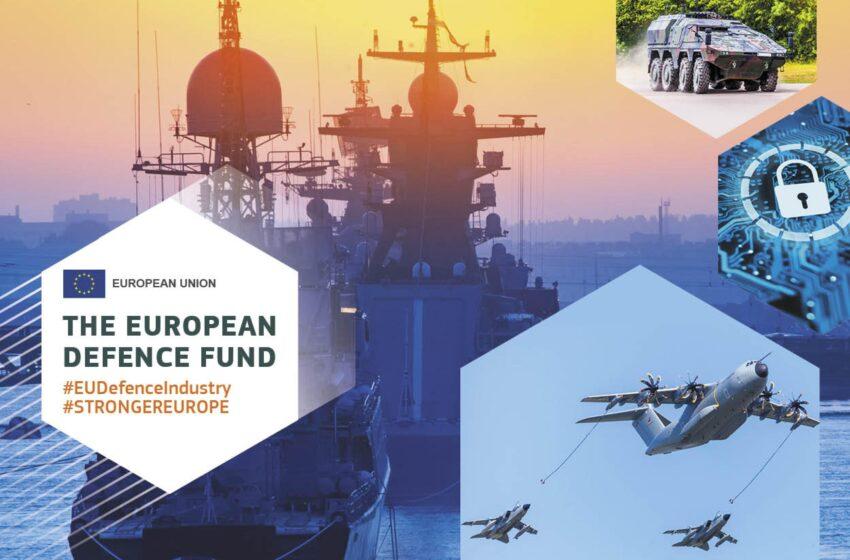
The European Defence Fund (EDF) is one of the main EU programmes supporting research and development in the defence sector. For companies, research organisations and startups working on dual-use or defence-related technologies, it offers a pathway to funding, partnerships and long-term collaboration at the European level.
What is the European Defence Fund
The EDF is an EU funding programme with a total budget of €7.3 billion for the period 2021–2027. It supports both research and development activities across areas such as space, cyber, sensors and defence systems.
Unlike many innovation programmes, EDF is shaped by Member States. This means that the topics included in each annual work programme reflect shared defence priorities across Europe, rather than bottom-up proposals from industry.
Each year, a new set of calls is published, based on a multi-annual planning process. By the time calls are released, they have already been discussed and refined at national and EU level.
Download EDF 2026 Call for Proposals Factsheet
Types of calls and opportunities for SMEs
EDF includes several types of calls, each with different levels of complexity and entry barriers.
Large thematic calls usually involve bigger consortia and higher budgets, bringing together multiple partners across Europe to work on complex defence challenges.
Alongside these, the programme includes SME-focused and disruptive calls, which are typically smaller in scale and more accessible to new participants. In some cases, SMEs are required to act as coordinators, creating opportunities for smaller organisations to take a leading role.
For early-stage companies, these smaller calls can be a more realistic entry point into the EDF ecosystem.
How participation works
Most EDF projects require a consortium of at least three independent organisations from three different EU Member States or associated countries. This cross-border requirement is central to the programme, as it aims to strengthen cooperation across the European defence sector.
Projects are evaluated based on several criteria, including excellence, innovation, competitiveness, autonomy and cross-border cooperation.
A key point is that proposals are expected to respond directly to the needs described in the work programme. Successful applications are not only technically strong but also closely aligned with the specific objectives defined by the European Commission and Member States.
A long-term process, not a quick win
One of the main takeaways for newcomers is that EDF is not a short-term opportunity.
Preparing a strong proposal can take time, often requiring organisations to understand the work programme, build a suitable consortium and align with national priorities. After submission, evaluation can take up to a year, and funded projects typically run for several years.
Because of this, organisations are encouraged to start early by following upcoming work programmes, attending info days and connecting with potential partners.
These insights were shared during a preparatory webinar for the EUDIS Defence Hackathon Netherlands, where Boy Dacier, National Focal Point for EDF at the Netherlands Enterprise Agency (RVO), outlined how organisations can position themselves for participation.
The role of national support
Participation in EDF is closely linked to national support structures.
In the Netherlands, this role is fulfilled by RVO, which supports organisations through advisory meetings, partner search and matchmaking, proposal feedback, and financial and legal guidance.
For development projects in particular, alignment with national defence priorities is important, and early contact with relevant authorities can help clarify requirements and opportunities.
Positioning yourself for EDF
For many organisations, entering EDF directly can be challenging, especially without prior experience or an established network in the defence sector.
A gradual approach is often more effective. This can include participating in hackathons, joining accelerator programmes, collaborating on smaller initiatives and developing dual-use applications.
These steps help build visibility, partnerships and credibility, making it easier to join or form a consortium for future EDF calls.
From the first idea to European collaboration
The European Defence Fund offers access not only to funding, but also to a wider European network of industry, research and defence stakeholders.
For organisations willing to invest time in understanding the programme, building partnerships and aligning with European priorities, it can become a pathway to scale technologies and contribute to broader defence innovation efforts.