Future EO: Supporting Youth and Start-ups for Europe’s Earth Intelligence
- Industry SpaceSUITE
Kacia Rutkoŭskaja
- 0
- 10 minutes read
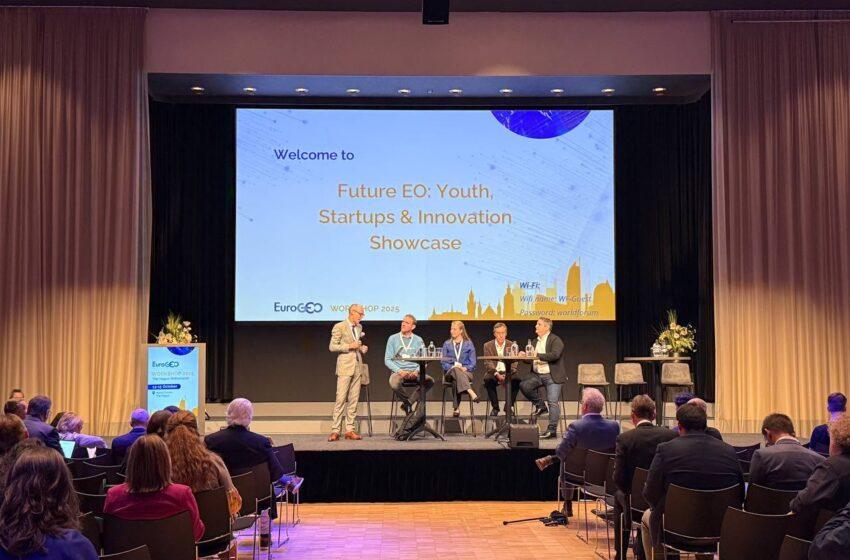
At this year’s EuroGEO Workshop 2025 in The Hague, the session “Future EO: Youth, Startups and Innovation Showcase” examined how EuroGEO can better support the next generation of innovators and entrepreneurs developing Earth Observation (EO) solutions across Europe.
EuroGEO: advancing collective Earth Intelligence
EuroGEO is Europe’s regional coordination mechanism for activities contributing to the global Group on Earth Observations (GEO). Since its creation, the European landscape has evolved significantly. The EU Space Programme has established the infrastructure, data, and technologies needed to observe and understand our planet, while EuroGEO coordinates and integrates these resources to address regional and global challenges.
At the GEO level, the new post-2025 work programme marks a shift from Earth Observation to Earth Intelligence and from a focus on services to equity, aiming to bridge information gaps worldwide.
The EuroGEO Workshop 2025, jointly organised by the European Commission, the EuroGEO Secretariat, and the Netherlands Space Office, brought together scientists, policymakers, innovators, and community leaders under the theme “Combine, Coordinate, Cooperate – Advancing collective Earth Intelligence.”
From data to opportunity
Representing the dotSPACE Foundation, Andrei Bocin-Dumitriu described the organisation’s work at the intersection of innovation, entrepreneurship, and capacity building in the space sector. He explained that dotSPACE acts as a connector and enabler, turning space data and technology into usable intelligence for public authorities, innovators, and entrepreneurs. Through Groundstation.space, dotSPACE bridges the gap between research and application, ensuring that Europe’s extensive EO data resources translate into real impact.
Andrei outlined three main transitions that shape the organisation’s approach:
From data to meaning
Europe has built one of the world’s most advanced EO infrastructures, but data alone does not create understanding. The next step is translation, making EO accessible, actionable, and relevant to local needs, from agriculture to climate resilience.
From understanding to use
Knowledge gains value only when it is applied. Through initiatives such as SKIES and SpaceSUITE, dotSPACE supports learning environments where participants can turn insight into innovation. In SKIES, early-career researchers receive entrepreneurship training to help them transform scientific ideas into projects or startups. SpaceSUITE extends this by co-developing modular courses and micro-credentials with universities and companies to close skills gaps across the downstream space sector.
As part of SpaceSUITE’s ongoing research, a short survey on space skills needs was shared with participants of the EuroGEO Workshop. The Erasmus+ Blueprint project is mapping current and emerging skills gaps across Europe’s downstream space ecosystem, including Earth Observation (EO), Global Navigation Satellite Systems (GNSS) and Satellite Communications (SatCom), to shape new education and training pathways.

Participants are invited to share their perspectives by answering a few questions on where they see the most pressing skills gaps, whether they are open to follow-up interviews, and if they wish to stay informed about SpaceSUITE’s results.
Your input will help align future capacity-building and training initiatives with Europe’s evolving EO and geospatial ecosystems.
(Co-funded by the European Union. Views and opinions expressed are however those of the author(s) only and do not necessarily reflect those of the European Union or the European Education and Culture Executive Agency (EACEA). Neither the European Union nor EACEA can be held responsible for them.)
From innovation to ecosystem
EuroGEO’s mission of linking EO to society aligns with dotSPACE’s broader goal of building an open innovation ecosystem where technology, communication, and education meet.
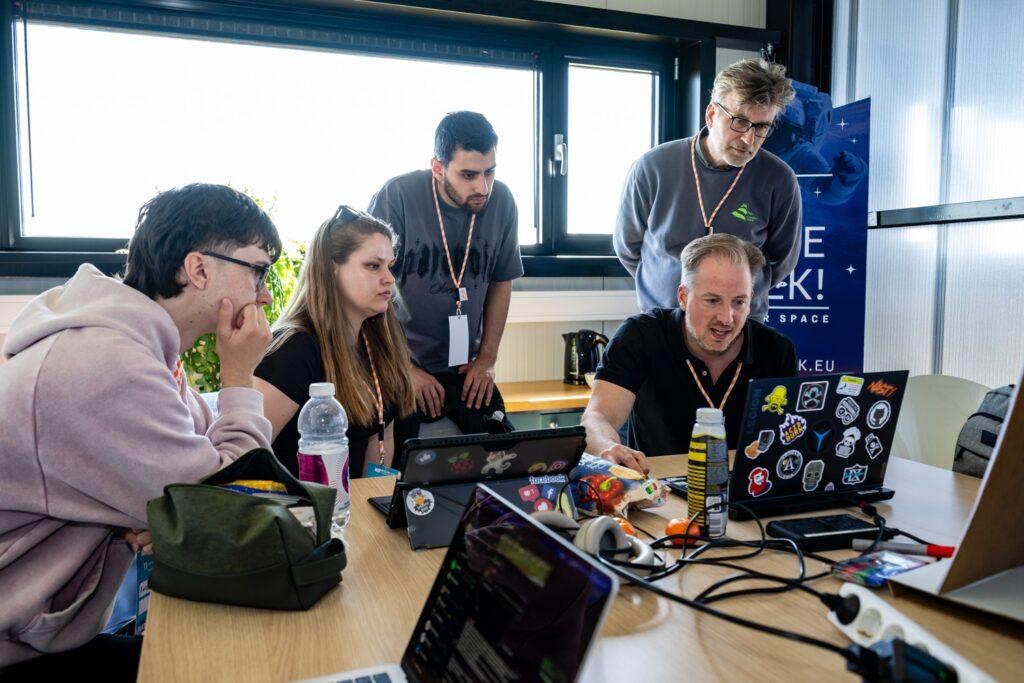
He also noted the growing importance of capacity-building and collaboration in creating this ecosystem. Beyond education and data platforms, dotSPACE supports communities through hackathons, mentorship, and matchmaking activities that connect researchers, startups, and investors. By lowering entry barriers, these initiatives help turn knowledge into practice and accelerate the societal uptake of EO-based solutions.
Andrei closed by reflecting on what he called “the grammar of innovation”, the shared language that allows scientists, entrepreneurs, and policymakers to work together. “If data are the words of our time, innovation is the grammar that connects them,” he said, emphasising that turning information into impact depends as much on collaboration and communication as on technology itself.
Engaging the next generation
From the student side, Kim Regnery shared the perspective of the Space Generation Advisory Council, calling for more ways to make Earth Observation engaging and accessible from an early age. She pointed to hackathons and interactive workshops as effective entry points where young people can explore EO data through teamwork, gamified problem-solving, and real-world challenges.
“University students already have many opportunities,” she said. “But we should also reach those in vocational education and even high school. That’s where curiosity starts.”
Her message echoed the broader call for EuroGEO to create more inclusive pathways into the sector. The panellists agreed that practical experimentation, mentoring, and early exposure are crucial for building both confidence and capability among future innovators.
LEOO: a local observatory with a global perspective
One of the session’s most inspiring examples came from LEOO, the Local Earth Observation Observatory, a science club from Secondary School No. 2 in Biała Podlaska. Created by students Martyna Michałowska and Alicja Stańko under the guidance of Renata Michalczuk and Professor Stanisław Lewiński, LEOO engages teenagers in satellite image analysis and environmental monitoring.

Their projects include tracking water quality, assessing land degradation, and comparing satellite imagery over time to understand local environmental change. The group also hosts lectures with national and international scientists and collaborates with the City of Biała Podlaska and the Space Research Centre CBK PAN.
LEOO’s story showed how local engagement and citizen participation can feed directly into the broader EuroGEO vision of connecting observation with action.
Towards a shared innovation ecosystem
The session concluded that EuroGEO has a unique opportunity to strengthen Europe’s innovation ecosystem by connecting national and local initiatives with continental platforms such as Groundstation.space and SpaceSUITE. By supporting young professionals, educators, and entrepreneurs, EuroGEO can turn Europe’s EO capacity into sustainable solutions for society.
Innovation in Earth Observation grows not only through data but through future talent who turn that data into understanding, action, and opportunity.