Amsterdam Space Symposium opens with NATO, ESA, EUSPA and national perspectives
- Industry NLSpace
Kacia Rutkoŭskaja
- 0
- 8 minutes read
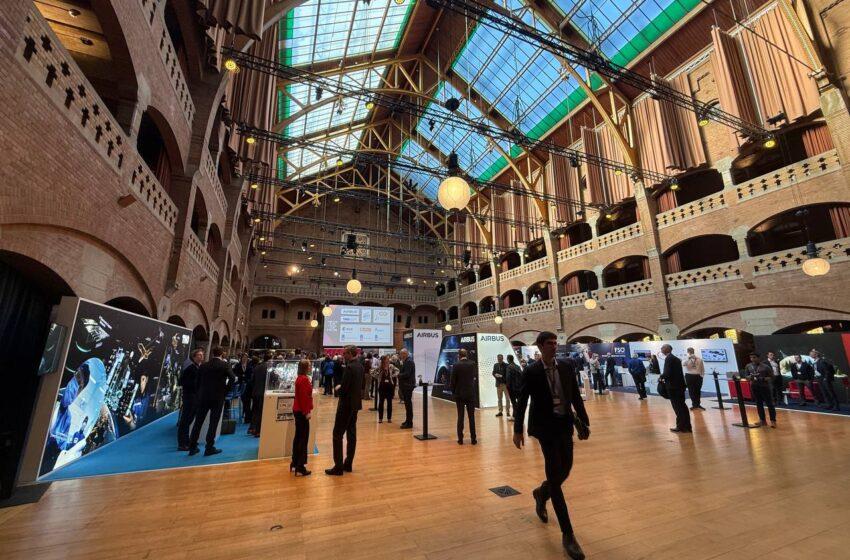
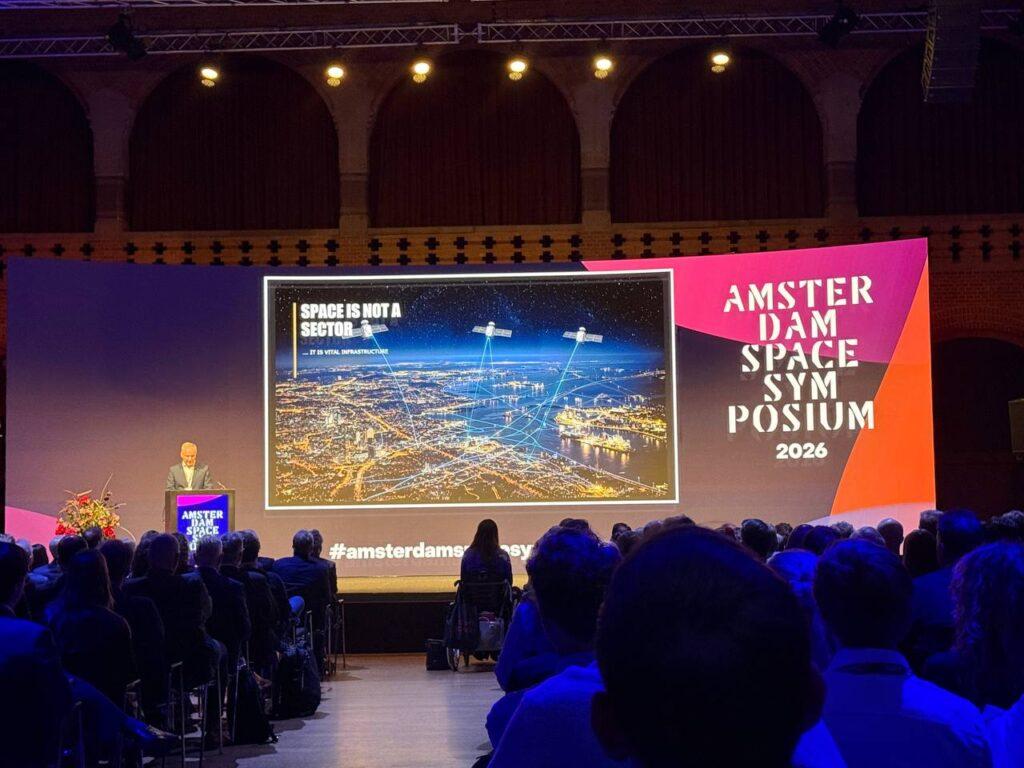
The Amsterdam Space Symposium 2026 opened this morning in Amsterdam. The first plenary session set the tone with a tightly aligned message across speakers: space systems sit inside day-to-day public services and inside defence operations, and their resilience is now a practical requirement rather than a policy ambition.
Amsterdam Space Symposium: a Dutch-initiated strategic forum
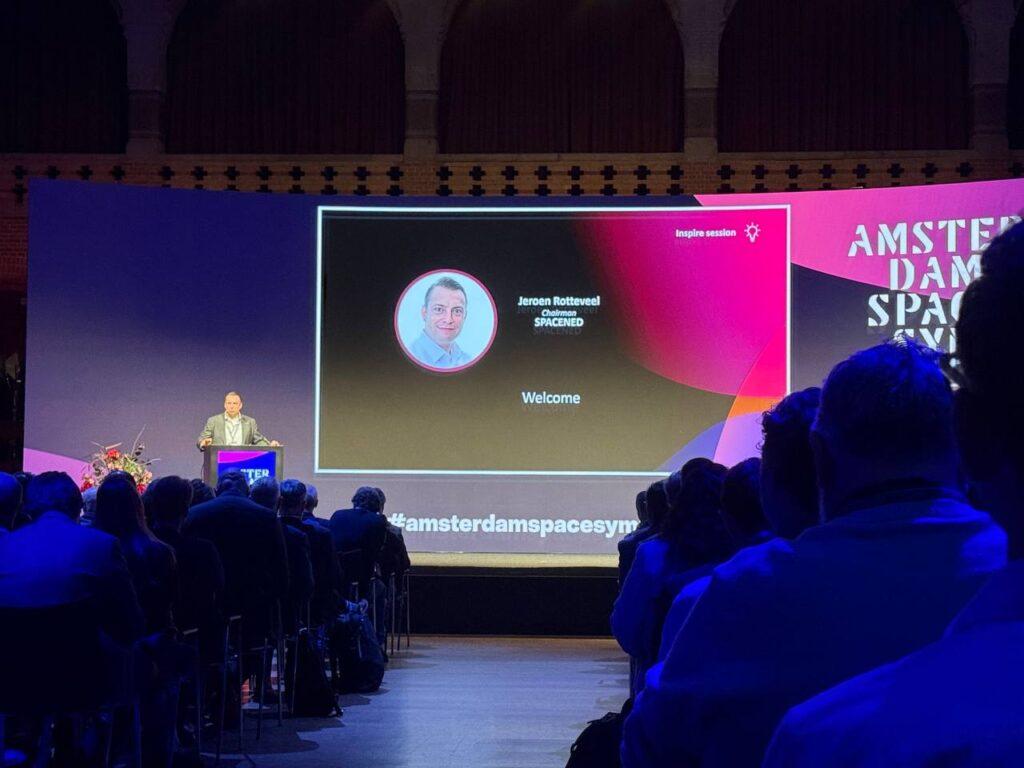
Jeroen Rotteveel, Chairman of SpaceNed and CEO of ISISPACE, opened the event by positioning the symposium as a strategic forum hosted in the Netherlands. He framed the programme around the overlap between security, defence and climate impacts, and emphasised the role of space-based observation and information services in decision-making across civilian and security contexts. He also highlighted the importance of ecosystem-level coordination, in practice: people, partnerships and execution capacity.
Tom Middendorp: climate as a risk multiplier, awareness as a stability tool
General (ret.) Tom Middendorp, Chairman of the International Military Council on Climate and Security, argued that climate change is increasingly a root driver of instability, amplifying existing social and geopolitical pressures. He linked climate volatility to resource stress, displacement and conflict dynamics, and emphasised the value of anticipation: early awareness as a prerequisite for timely decision-making.
Space capabilities were presented as part of the “nervous system” that enables monitoring and early warning, supporting climate risk management alongside security planning.
Dietmar Pilz: ESA strategy anchored in Earth observation, autonomy and enabling technology
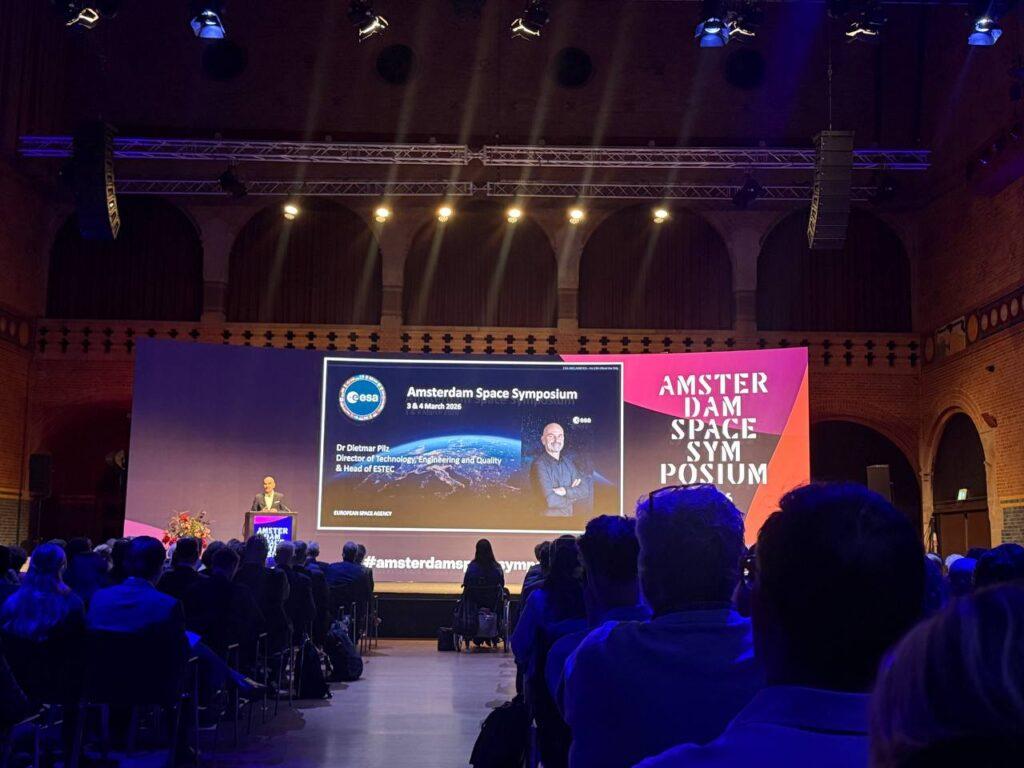
Dietmar Pilz, ESA Director of Technology, Engineering and Quality and Head of ESTEC, framed climate protection as a strategic priority under ESA’s direction, pointing to sustained European investment in Earth observation and climate monitoring capabilities. He also underlined the security dimension and the need for European autonomy and resilience, including reduced dependence on non-European components and secured access to space.
Technology development was the central enabling thread, spanning areas such as secure communications, AI, cybersecurity, propulsion and large-scale production capacity.
Rodrigo da Costa: EU Space Programme as operational infrastructure
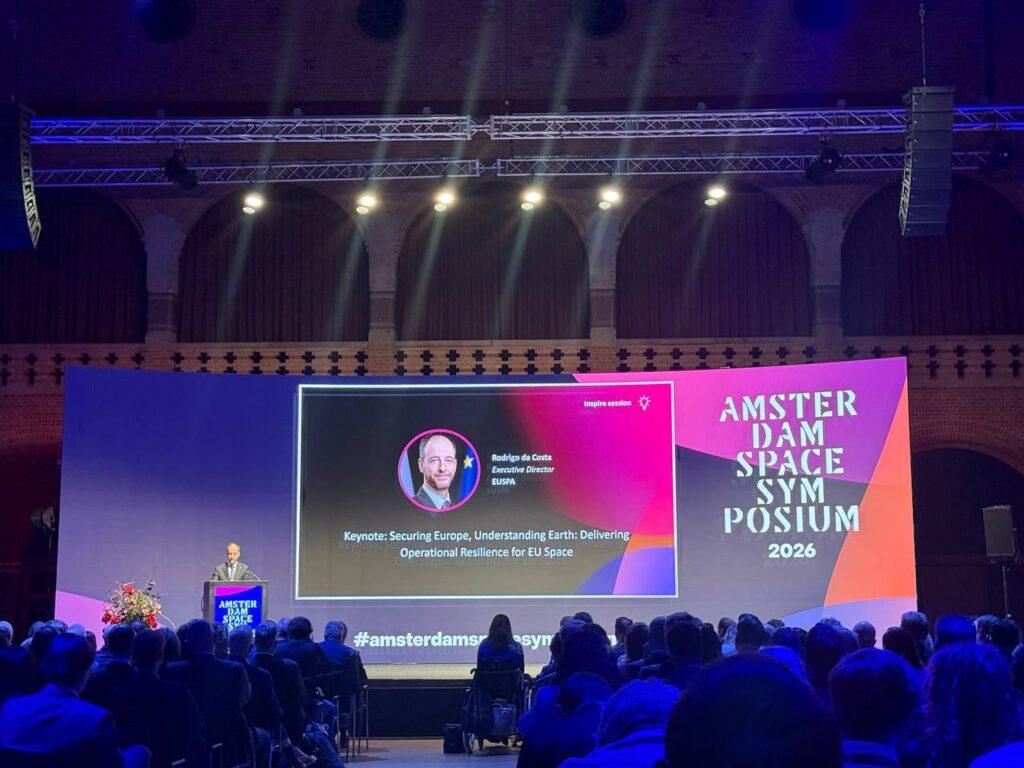
Rodrigo da Costa, Executive Director of EUSPA, focused on the operational and service layer of the EU Space Programme. He described how Galileo, EGNOS, Copernicus, IRIS², GovSatCom and Space Surveillance and Tracking function as usable capabilities across civil domains and government missions.
A recurring point was that competitiveness and resilience depend on converting space data into reliable services, with consistent attention to operational security, user uptake and continuity.
Mark Rutte: NATO space posture and the contested environment
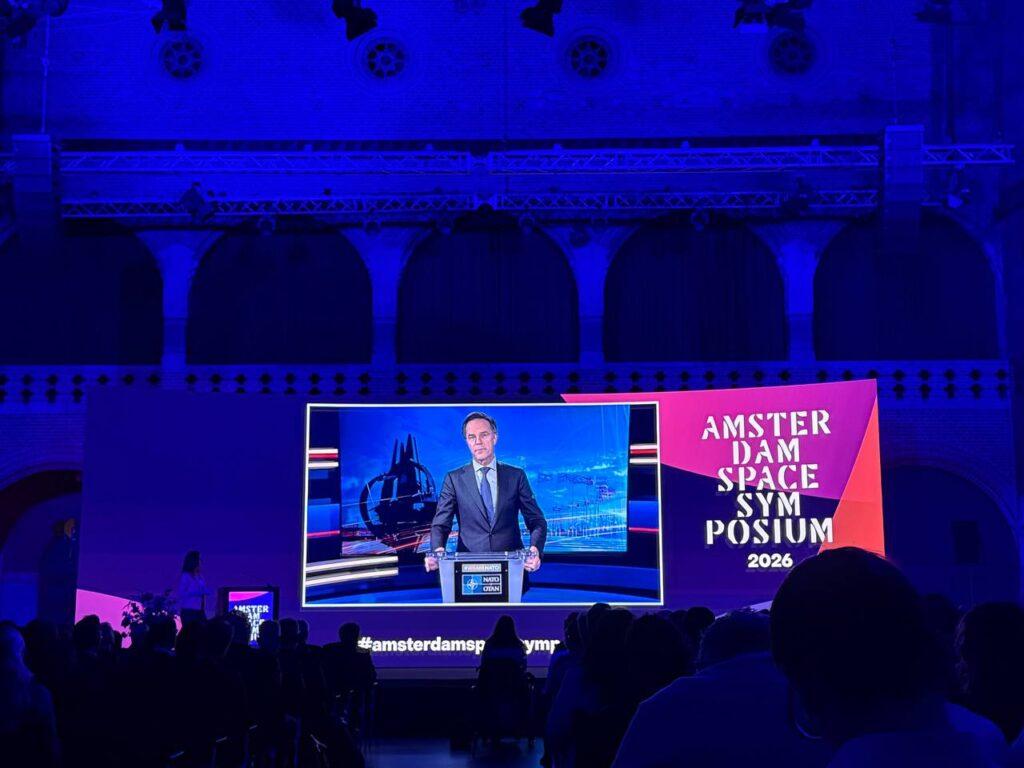
In a recorded address, NATO Secretary General Mark Rutte described space as critical infrastructure for economies and for military operations, with secure communications and navigation presented as foundational dependencies. He warned that the space domain is increasingly contested, including through the testing of anti-satellite capabilities, and summarised NATO’s adaptation since recognising space as an operational domain in 2019.
He pointed to NATO structures and initiatives intended to improve coordination, strengthen resilience and support structured engagement with commercial providers.
Dick van Ingen: counter-space trends and Dutch capability development
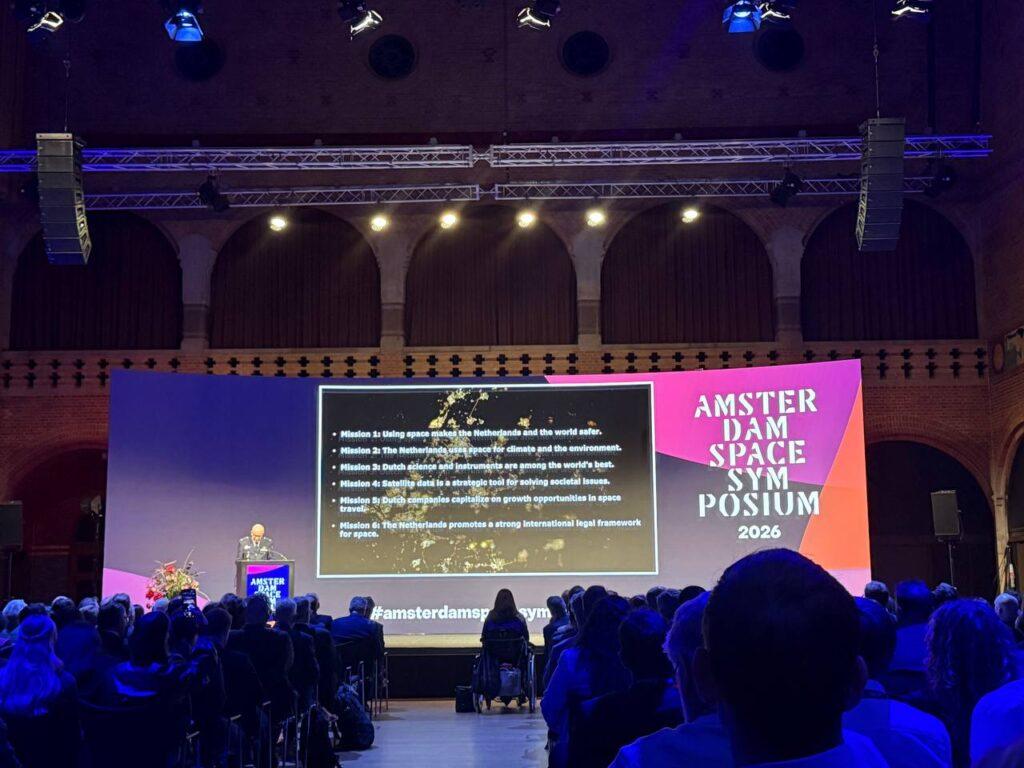
Lt. Gen. Dick van Ingen, Permanent Military Representative of the Netherlands to NATO, emphasised the growing militarisation of space and emerging counter-space threats, arguing that freedom of access and use must be preserved as part of civil resilience and collective defence.
He outlined NATO’s operational space functions and multinational surveillance efforts, discussed EU dual-use programmes and the planned European Space Shield, and described Dutch capability development across PNT, Earth observation, space domain awareness and national contributions to satellite constellations. He also flagged constraints on NATO–EU data sharing as an issue that will need practical solutions.
About the Amsterdam Space Symposium
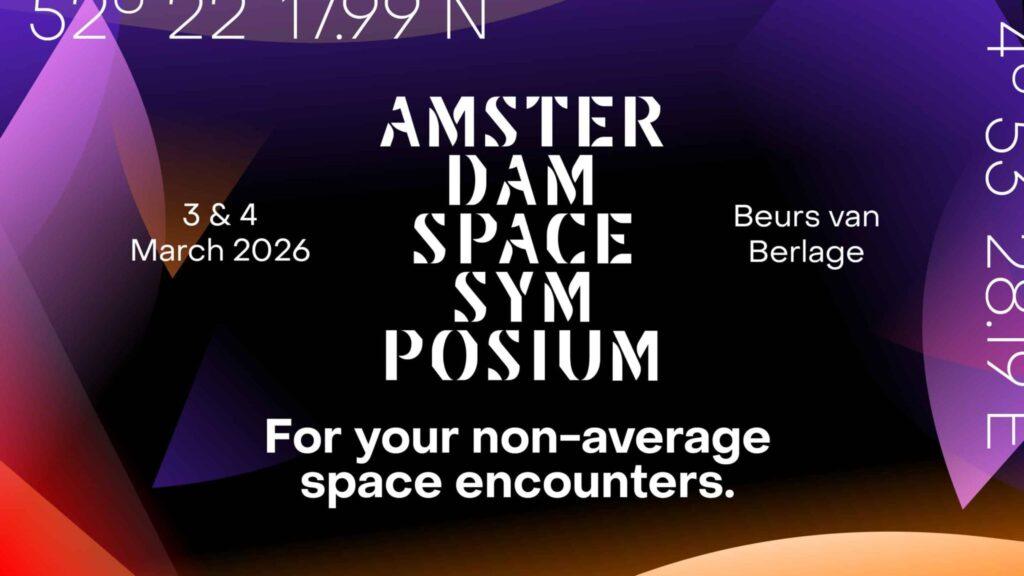
The Amsterdam Space Symposium takes place on 3 and 4 March 2026 at Beurs van Berlage. The programme combines plenary keynotes with parallel panels, masterclasses and workshops addressing operational, industrial and policy dimensions of space. Sessions cover interoperability in the space domain, protection of positioning, navigation and timing services, in-orbit refuelling, satellite communications, Earth observation for climate applications, biodiversity monitoring and Europe’s space supply chain. An exhibition runs alongside the conference, with scheduled networking sessions across both days.