From Ideas to Action: EUDIS Defence Hackathon Netherlands Brings Knowledge, Industry and Defence Together
- HACKATHONS
Martijn Seijger
- 0
- 15 minutes read
From 17 to 19 October 2025, the EUDIS Defence Hackathon took place at Unmanned Valley, the former naval airbase in Katwijk. Organised by Groundstation.Space, with support from the Netherlands Ministry of Defence, NL Space Campus, SBIC Noordwijk, TNO, NLR, and InnovationQuarter, the hackathon brought together students, entrepreneurs, engineers, and defence experts to tackle Europe’s most pressing challenges in space and aerospace security.

The Dutch edition was part of the EU Defence Innovation Scheme (EUDIS), a European Defence Fund initiative aimed at opening the defence sector to new players. Eight countries hosted parallel hackathons across Europe, all linked by a shared goal to strengthen Europe’s strategic autonomy through innovation.
“A fantastic collaboration between industry, knowledge and defence. Glad to be a part of it and mentor the teams tonight. Thanks to the project team and other mentors for organising this event, which got off to a great start.”
— David de Groot, Innovation Manager, Ministry of Defence (MIND)
Hands-on Start: Building Drones Together
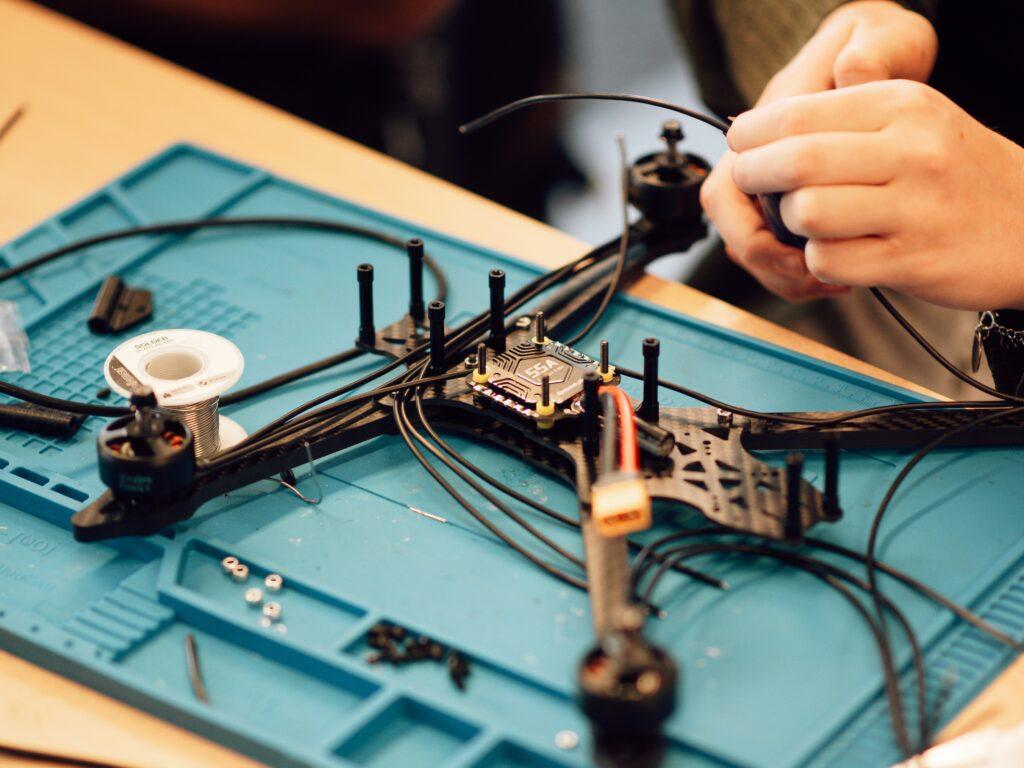
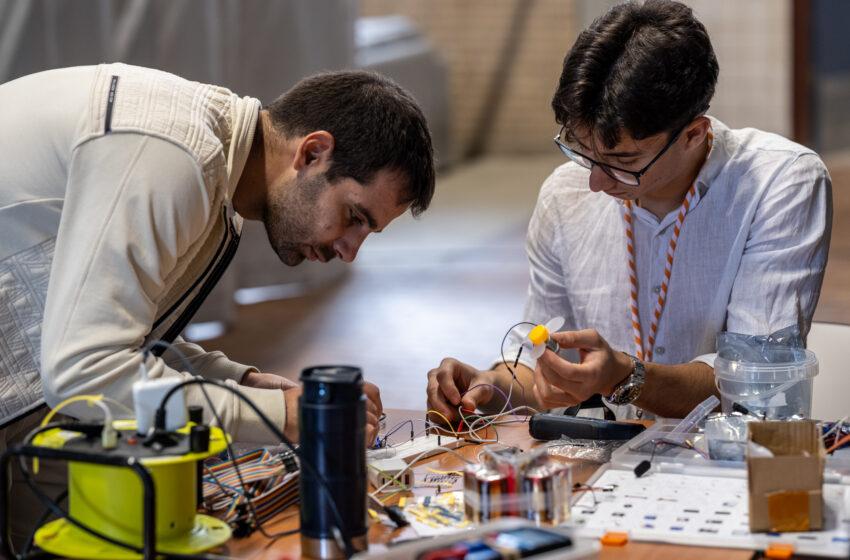
The weekend began with a drone-building workshop by DroneAid Collective, setting the tone for practical, hands-on learning. In just three hours, participants assembled functional FPV drones from twelve components, many for the first time. The session demonstrated the power of learning by doing and brought together participants from engineering, data, and design backgrounds.
“When people build something themselves, they immediately understand how drones work and what they can achieve,” said Max Boreiko, co-founder of DroneAid Collective, during the preparatory webinar.
By the end of the session, a demonstration was given, above the Unmanned Valley airspace, demonstrating the capabilities of a 10-inch FPV drone. This marked the official lift-off of the hackathon weekend.
From Ideas to Prototypes

Day 1 of the hackathon opened with welcoming words from Mrs Elise Teuben, Director of Knowledge and Innovation at COMMIT, and a keynote by Maj. Gen. (ret.) Volodymyr Havrylov, former Deputy Minister of Defence of Ukraine. His message resonated across the hall: innovation is essential not only for competitiveness but for resilience and security.
Participants quickly formed teams around three challenges: Protection of Space Assets, Space for Defence, and Sovereign Aerospace, guided by mentors from the defence, space, and technology sectors. Ideas began taking shape, and collaboration flourished between experts, students, and startups.

By Day 2, the atmosphere at Unmanned Valley was charged with focus and creativity. Teams refined their concepts, tested drone components in open air, and received guidance from mentors representing the Dutch Ministry of Defence, TNO, NLR, and industry partners.
As one participant said, “Yesterday was all about shaping an idea; today is about execution. Tomorrow will be exciting.”


Pitching the Future of Defence
After an intense weekend of hacking, prototyping, and collaboration, teams presented their final ideas to the jury on Sunday, 19 October.

1st place – Team Trusk tackled the Sovereign Aerospace challenge with a system of low-cost autonomous interceptor drones designed to counter Shahed-type kamikaze drones. Their prototype demonstrated how affordable automation and tactical sensing can close critical gaps in air defence.

2nd place – Team Mosquito presented a scalable solution for carrier-launched micro-drones capable of performing missions over long distances at minimal cost, blending aerospace engineering with advanced guidance systems.

3rd place – Team Vydar developed an AI-powered night-time drone interception system using European-made hardware, showing how low-cost optical and thermal cameras can detect and neutralise aerial threats.

The Economic Board Duin en Bollenstreek Valley Impact Prize went to Team NOMAD, which proposed a concept for rapid, mobile launch capabilities for small-scale space operations, reflecting the potential of European-made, flexible space access.
Each of these projects highlighted how cross-sector collaboration between defence, Post-secondary education, and industry can generate tangible ideas with real-world impact.
A National Effort with a European Dimension
The Dutch hackathon was one of eight held simultaneously across Europe, all connected through the EUDIS framework. Local winners, including Team Trusk, will advance to the European mentorship programme, where they will refine their concepts with expert guidance before pitching to EU Member State representatives.
As Groundstation.Space, we are proud to have coordinated the Dutch edition, bringing together partners, mentors, and participants to demonstrate how space technologies and data can be applied to defence innovation. The event showed that when knowledge, government, and industry unite, new ideas do not just emerge; they take flight.
Let’s Tackle the Next Challenge Together
Hackathons like this play a vital role as capacity-building events, connecting people, strengthening skills, and encouraging collaboration between sectors. They also complement European initiatives such as SpaceSUITE, which focuses on skills development and user uptake in the space downstream sector through innovative training and education.

While hackathons are fast-paced and fun, they also offer much more. They foster innovation, enhance digital skills, and connect participants with industry experts. For stakeholders across Post-secondary education, public institutions, and industry, they are valuable opportunities to discover fresh perspectives, connect with emerging talent, and explore new solutions to strategic challenges.
Stay tuned to Groundstation.space for updates on upcoming hackathons, opportunities to get involved, and highlights from past events.
Stay updated with the Hackathons page
Interested in how a hackathon could help advance your organisation’s goals or workforce skills? Reach out to us at hackathons@groundstation.space to explore partnership opportunities.
Photo by Wendy Mensink