Marine Biodiversity Monitoring Workshop Created Space for Sharing Tools, Challenges, and Solutions (List of Funding Opportunities Included)
- Funding SATINSIGHT
Kacia Rutkoŭskaja
- 0
- 13 minutes read
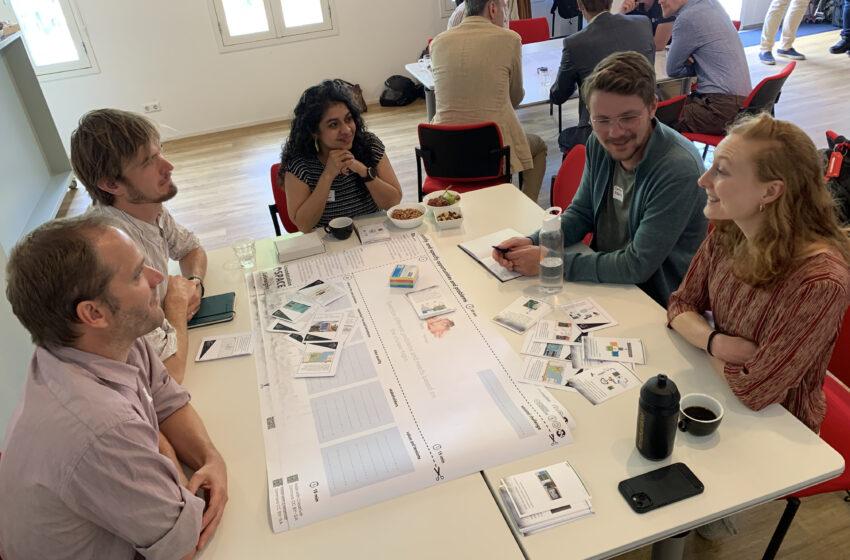
On 3 July 2025, dotSPACE and Reefy co-hosted a hands-on Marine Biodiversity Monitoring Workshop at Buccaneer Delft. The event brought together experts in ecology, engineering, policy, and satellite data to explore how we can better monitor and support marine ecosystems through both innovative technologies and new approaches.
Combining short presentations, collaborative concept development, and informal networking, the session welcomed more than 20 participants who shared perspectives on remote sensing, data gaps, nature-inclusive design, and biodiversity metrics.
Setting the Scene
dotSPACE opened the session with an introduction to its mission of connecting satellite data with real-world applications. The team presented their latest initiative, the Sat-Insight Tech Hub, which is enhancing Groundstation.space as a platform for remote sensing and AI applications. Co-funded by the Province of South Holland. This project supports knowledge exchange, training, and practical integration of satellite insights across prioritised economic sectors such as Urban planning and infrastructure, Maritime logistics, Energy, Climate and environmental monitoring and Water management, including horizontal thematics, such as biodiversity, and climate resilience.


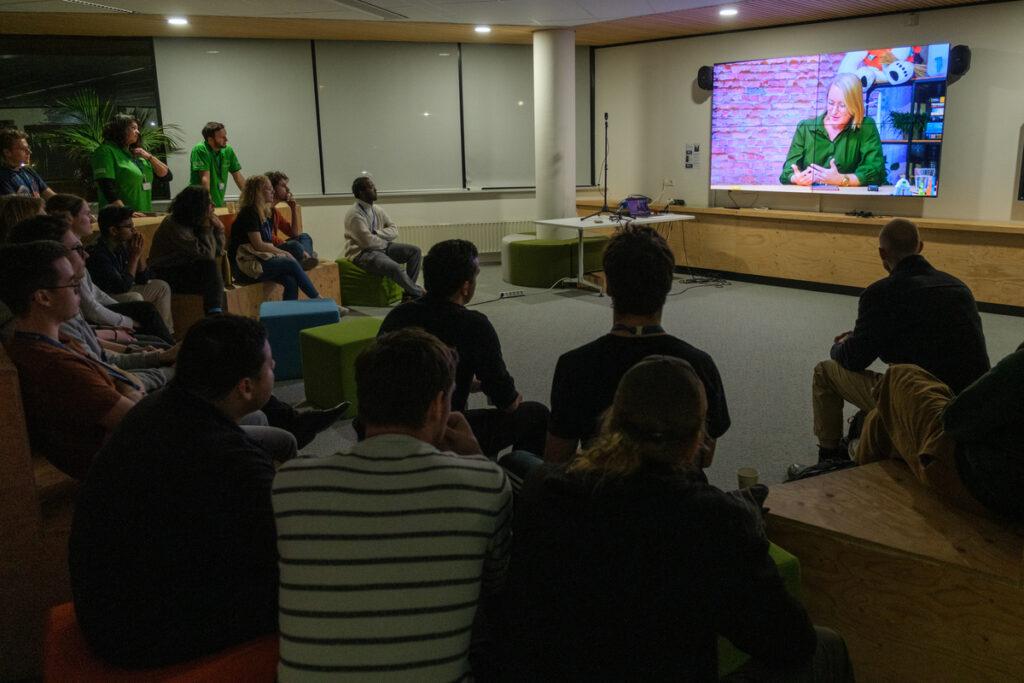
Reefy followed with a presentation on their modular reef blocks, which stabilise coastlines while creating habitats for marine life. Their field data showed that textured reef surfaces can triple biodiversity compared to smooth concrete. Using tools like eDNA and underwater imaging, Reefy is building a strong case for infrastructure that supports both safety and ecosystems.
The province of Zuid Holland added a systems-level perspective, by introducing the Delta21 project. Delta21’s ambitious idea is a future-proof solution for the southwestern delta. A solution for water safety, energy storage, and nature restoration. The project proposes a pumped hydro lake to buffer energy from offshore wind while reducing flood risk. Nature development is a core part of the design, and the team stressed the importance of robust monitoring to align with ecological regulations and opportunities for habitat creation.
Group Work Highlights
After the presentations, participants split into three groups to work through innovation canvases and develop practical concepts.
Concept 1: Collaborative Data Ecosystems

This group proposed a shared data platform that brings together satellite and in-situ data to monitor marine biodiversity over time. The system would allow different organisations to contribute data, generate visual insights, and support decisions with context-aware information. Features could include public awareness tools, collaborative dashboards, and predictive layers for specific indicators such as chlorophyll or temperature.
Concept 2: Technical Ecology and Predictive Insight

The second group focused on designing interventions that benefit both humans and nature. Instead of collecting more data, they proposed correlating existing datasets such as EO, eDNA, and water quality to understand ecosystem dynamics and predict outcomes. The result would be a transparent platform that supports decision-making, promotes dual-use design, and helps bridge the gap between policy, engineering, and ecology.
Concept 3: Reframing Biodiversity as a Pulse

The third team approached biodiversity monitoring from a more philosophical angle. They asked what it truly means to detect and define life in marine systems. Their concept focused on using natural rhythms and diverse sensors to identify patterns and anomalies over time. They discussed the importance of reframing biodiversity as a shared pulse rather than a compliance metric and proposed ways to make data more accessible, meaningful, and representative of both human and non-human stakeholders.
Looking Ahead
The session closed with a curated overview of relevant EU funding opportunities, encouraging participants to take their ideas forward. Calls related to biodiversity, blue carbon, and environmental monitoring were shared, along with an invitation to collaborate and build consortia with support from dotSPACE.
List of Open Calls
- Restoring ocean and waters on islands
- Restoring ocean and waters in waterfront cities and their ports
- Restoring ocean and waters in regions
- Digital technologies and energy transition in fisheries and/or aquaculture
- A toolbox for public authorities to address marine plastics and litter from river to ocean
- Blue Parks – Towards a coherent European network of strictly protected areas
- Demonstrating solutions to help hotspots in coastal regions adapt to climate change
- Innovative solutions for resilient and climate-adapted coastal communities in the Atlantic
- The ocean-climate-biodiversity-people nexus – uncovering safe operating space
- The ocean-climate-biodiversity nexus and marine carbon dioxide removal (mCDR)
- Integrated and coordinated approaches for coral reefs and associated ecosystems
- Large-scale in-situ biodiversity observations
- Strengthening the capacity of citizen science in biodiversity observation
- Understand and minimise the environmental impacts of offshore wind energy
- Real-time monitoring of vessel and port activity emissions
For follow-up questions or support with developing your idea, you are welcome to reach out to martijn.seijger@groundstation.space.
If you’d like to stay updated on Reefy’s work and related opportunities, you’re welcome to subscribe to their newsletter: Click here.
Final Reflections

This workshop reminded us that biodiversity monitoring is not just a technical challenge. It is also about shared values, better questions, and cross-sector collaboration. Whether through reef blocks, satellite platforms, or participatory tools, the goal remains the same—making the health of our oceans visible, measurable, and protectable.
If you’re interested in being part of this conversation, stay connected with Groundstation.space for future updates and opportunities.