Testing Defence Solutions in a Real Operational Setting: Why Startups and SMEs Join the EUDIS Defence Hackathon
- Defence HACKATHONS
Martijn Seijger
- 0
- 13 minutes read
The EUDIS Defence Hackathon offers startups and SMEs a setting to test defence solutions under real operational conditions, work against clearly defined challenges, and engage directly with end-user needs. In practice, this work often extends beyond a single weekend. In October 2025, Trusk entered the Dutch edition of the hackathon and, three months later, went on to win the EU-wide pitching competition, progressing to European-level defence innovation platforms.
The EUDIS Defence Hackathon returns for its Spring 2026 edition from 26 to 28 March 2026, taking place in parallel across eight locations in the European Union and Norway. The upcoming edition focuses on Defending Airspace, with challenges addressing cost-effective drone interceptors, next-generation detection systems, and a local organiser-defined challenge.
The Spring 2026 edition is positioned primarily for teams that are already developing solutions or working with early prototypes (TRL 4–5). Rather than open-ended ideation, it offers a short, focused environment to pressure-test technical direction, assumptions, and team setups alongside others operating in the same domain.
Trusk, winner of the Dutch edition of the EUDIS Defence Hackathon in October 2025 and later first place at the EU-wide pitching stage, illustrates how this profile plays out in practice.
A hackathon for teams that are already building
Trusk came into the EUDIS Defence Hackathon with a clear starting point and an early product already taking shape. The idea had been sparked earlier at the European Defense Tech Hub hackathon at DeltaQuad headquarters in Amsterdam, where the team first began exploring the problem space. “For a while, it was just me and Tom, my co-founder,” said Caspar Lusink. By the time they joined EUDIS, they were already moving: “We went to Ukraine to meet with the end users,” and raised “a pre-seed round from a local fund” around the same period.

The hackathon weekend then became a structured way to pressure-test that trajectory, both technically and organisationally. Trusk entered with a small core team and expanded it through the hackathon network and their own outreach. “We joined the hackathon with only two people,” Lusink explained, and “recruited six people” to work as one team during the weekend. The goal was not recruitment for its own sake, but finding contributors who could operate under time pressure and fit an existing build path. That approach paid off: “Three people from that team later joined our company. One is still finishing a PhD, but we’re arranging a collaboration there as well.”
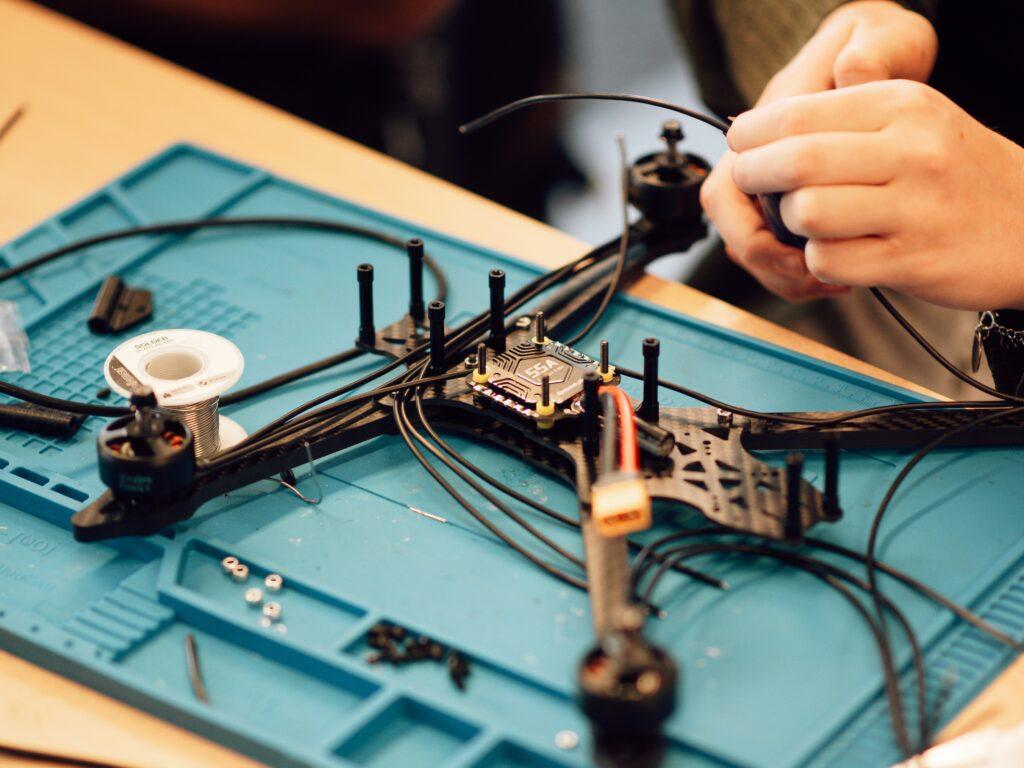
Lusink highlighted that the most important ingredient was mindset. “People who come to hackathons usually have a more entrepreneurial mindset. They want to solve problems and want to do it in the fastest way possible.” For defence-focused hackathons, he also pointed to commitment: “People are giving up their weekend to build something, often primarily to help Ukraine.” On the technical side, Trusk split the work into three parallel tracks: computer vision, deep GNC and aerospace work, and hands-on drone development to enable real testing during the weekend.
What you find at a hackathon that you won’t find at an expo
For Lusink, the decision to join defence hackathons is closely linked to one persistent challenge for startups: understanding what is genuinely needed in operational contexts. “One of the hardest problems for startups is figuring out what is actually needed,” he said. “In defence, that problem is even bigger because so much information is classified and not easily shared, even between countries.”
Hackathons such as EUDIS address this gap by starting from clearly defined challenges formulated by innovation departments and military stakeholders. “You hear directly what they need. The problem is already thought through and framed as a challenge,” Lusink explained. For teams that are already building, this provides a concrete starting point for testing whether a solution aligns with real end-user needs.
Beyond problem definition, hackathons also create conditions that are difficult to replicate in more traditional settings. “You cannot build anything truly impactful alone,” Lusink noted. The format attracts people who are willing to commit time and energy to solving complex problems together, often under significant time pressure. For Trusk, this combination of direct operational input and access to motivated, like-minded contributors made hackathons a more effective environment for validation and progress than conventional industry events. He also pointed to the value of the environment itself. “Working intensely with your team over a weekend, surrounded by other teams, is motivating. Startups can be quite lonely otherwise.”
Testing at Unmanned Valley


The Dutch edition of the hackathon took place at Unmanned Valley, which Lusink described as a clear advantage for teams working on operational technologies. “There’s a makerspace, and there’s the opportunity to fly,” he explained. “Software is important, and our first product is software, but it really comes to life when you can use it in the real world.”
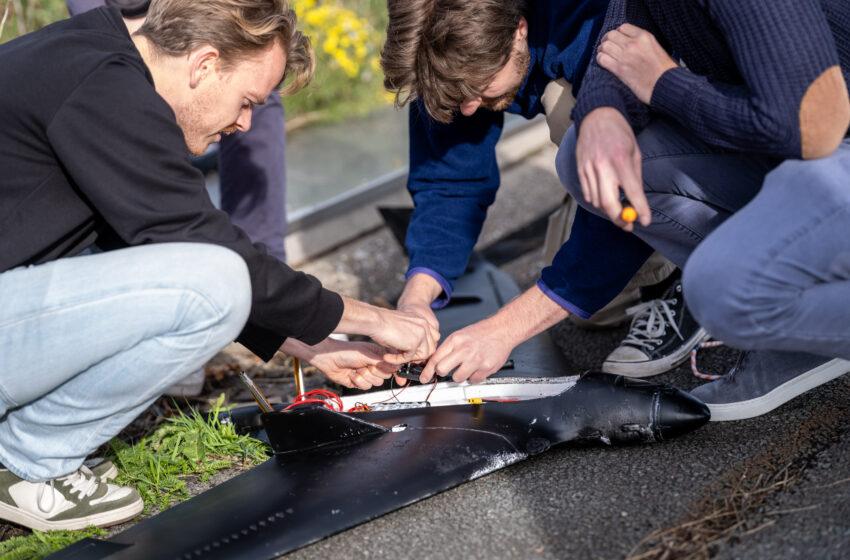
Over the course of the weekend, Trusk carried out three to four physical experiments, flying around a target drone and measuring it using infrared cameras they had brought themselves. The ability to test hardware and software together made the work more tangible. “It becomes much more real when you have actual footage, compared to just lines of code,” Lusink said.
Having access to a testing environment during the hackathon also strengthened the team’s final pitch, grounding it in real-world experimentation rather than theoretical assumptions. The Spring 2026 edition of the EUDIS Defence Hackathon in the Netherlands is also taking place at Unmanned Valley, offering similar opportunities for hands-on testing.
After the weekend: concrete follow-up beyond the hackathon
What happens after a hackathon often depends on how much time teams can realistically dedicate once the weekend is over. As Lusink noted, “For many people, Monday comes and work resumes, which makes it hard to continue.” For Trusk, however, the hackathon fitted into an existing trajectory. The team was already working full-time on the product and simply continued building.
Several contributors who joined during the hackathon remained involved beyond the weekend, with three people later becoming part of the company and an additional collaboration being explored with a PhD candidate.
Winning at EU level also opened up further opportunities. Trusk was invited to pitch at EDF Days in Brussels, one of Europe’s major defence events. In parallel, Lusink applied to the EUDIS Business Accelerator, a follow-up programme linked to the hackathon ecosystem.
Current focus: operational development and seed funding
Since the hackathon, Trusk has continued to develop operationally. “We recently started a large project with the Dutch Ministry of Defence to co-develop a solution that is really needed in the counter-UAS space,” Lusink said.
At the same time, the company is working closely with Ukrainian partners on its core project, an autonomous interceptor. “We’re developing a specific interceptor together with them that is completely autonomous, and we hope we can test it in about two months.”
Trusk is preparing a seed fundraising round to support the next phase of development. “We’re doing a seed round in March,” Lusink said. Interested parties can find more information via the company’s website or reach out directly.
EUDIS as a pathway, not just a competition
The EUDIS Defence Hackathon is part of the European Union Defence Innovation Scheme (EUDIS) and is designed as more than a standalone competition. It functions as an engagement platform within the European defence and space innovation ecosystem, connecting innovators, startups, and SMEs with concrete challenges defined by public authorities and end users.
Rather than focusing on open-ended ideation, the hackathon is structured around clearly formulated problem statements and time-bound development. Teams work intensively over a short period to develop, test, and present solutions, supported by mentors, technical infrastructure, and access to defence innovation stakeholders. Selected teams can progress beyond the hackathon itself through EU-level pitching, mentoring programmes, and follow-up acceleration opportunities.
Across its first three editions, the EUDIS initiative has delivered 24 hackathons across Europe, engaging more than 1,200 participants from the European Union, Norway, and Ukraine. Each edition brings together innovators, researchers, startups, industry representatives, and end users to work on defence and security challenges in close coordination with public authorities.

For teams that are already building and looking to validate direction, EUDIS offers a short but concentrated entry point into the wider European defence innovation landscape, combining technical development, operational feedback, and visibility within a broader European framework.