Inside the Amsterdam Space Symposium: where defence, climate and space policy shared the stage
- Industry NLSpace
Kacia Rutkoŭskaja
- 0
- 14 minutes read
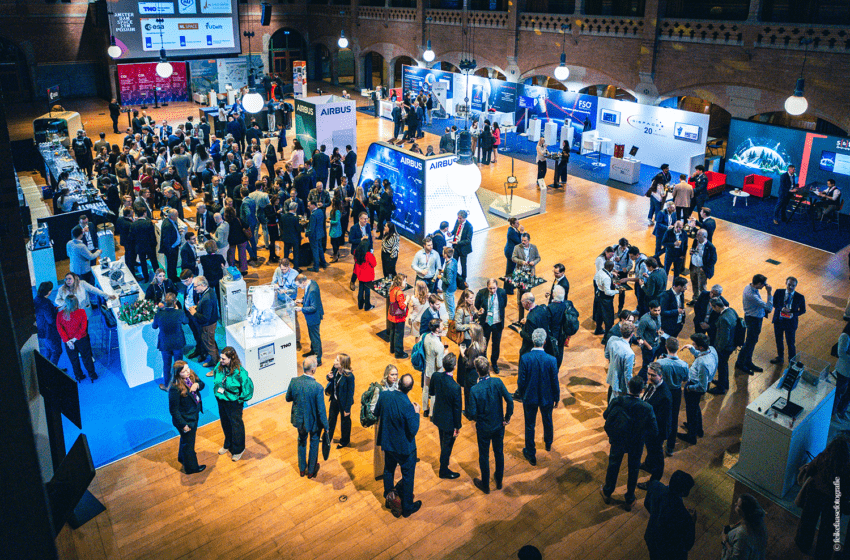
On 3–4 March 2026, the Amsterdam Space Symposium, organised by SpaceNed, took place at the Beurs van Berlage in Amsterdam, bringing together more than 500 participants, over 100 speakers, 15 exhibitors and 10 sponsors.
The event featured plenary keynotes, panel discussions, masterclasses, workshops and an exhibition area where companies, research institutes and public organisations presented technologies ranging from satellite platforms and sensors to Earth-observation analytics, communications systems and mission hardware.
Discussions during the two days covered topics such as space security and defence, satellite communications, positioning and navigation infrastructure, climate monitoring, industrial supply chains, emerging technologies, regulation and space sustainability. The symposium also served as the setting for the official launch of the Netherlands Space Agency (NLSA), marking the transition from the Netherlands Space Office to a national agency.
Opening plenary features NATO, ESA and EU space perspectives
The symposium opened on 3 March with a plenary session featuring speakers from NATO, the European Space Agency, the EU Agency for the Space Programme and the Dutch defence establishment.
Jeroen Rotteveel, Chairman of SpaceNed and CEO of ISISPACE, introduced the event and outlined the links between security, defence and climate challenges. General (ret.) Tom Middendorp, Chairman of the International Military Council on Climate and Security, discussed climate change as a driver of instability and the role of satellite data in monitoring environmental pressures.
ESA’s Director of Technology, Engineering and Quality and Head of ESTEC, Dietmar Pilz, referred to European investments in Earth observation and technology development in areas such as AI, cybersecurity and propulsion. Rodrigo da Costa, Executive Director of the EU Agency for the Space Programme (EUSPA), highlighted operational systems of the EU Space Programme including Galileo, EGNOS, Copernicus, IRIS², GovSatCom and Space Surveillance and Tracking.
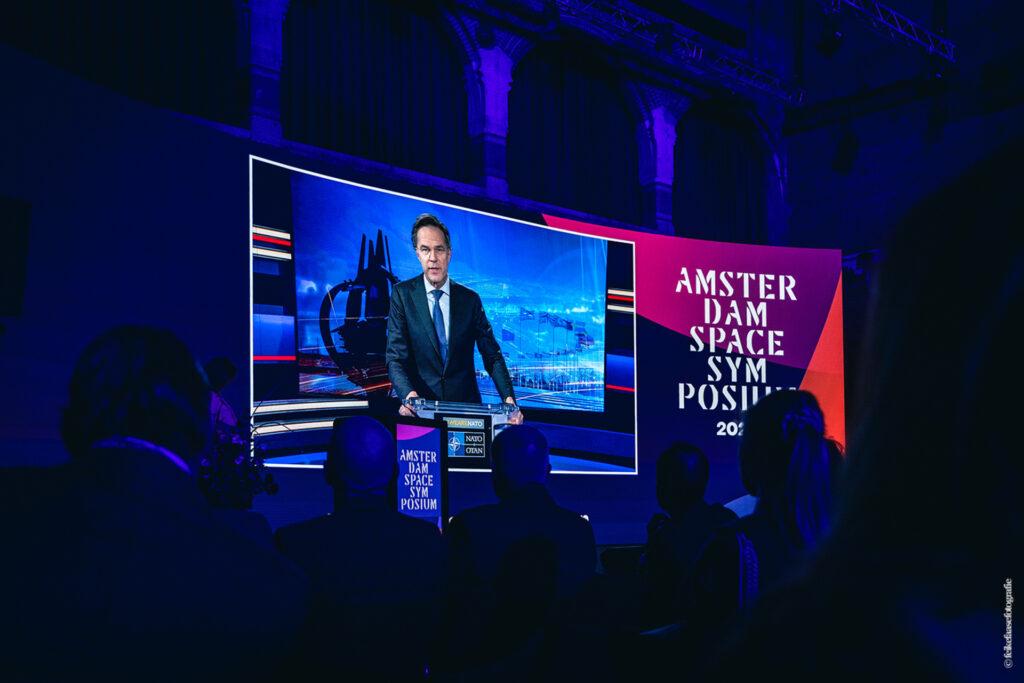
NATO Secretary General Mark Rutte addressed the audience through a recorded message, describing space infrastructure as essential for communications, navigation and defence operations.
The plenary concluded with Lieutenant General Dick van Ingen, Permanent Military Representative of the Netherlands to NATO, who spoke about the growing military role of space and emerging counter-space capabilities. He referred to NATO’s operational space activities, EU dual-use initiatives and Dutch capability development in areas such as positioning, navigation and timing (PNT), Earth observation and space domain awareness, while also noting practical limitations in NATO–EU data sharing.
Panels, workshops, masterclasses and talk shows
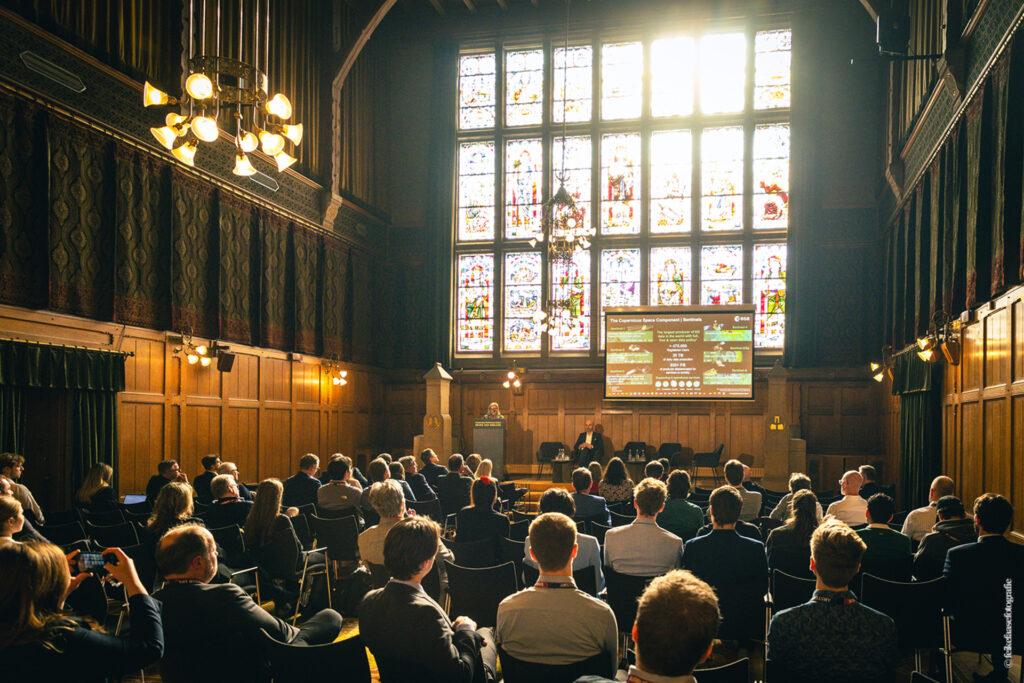
After the opening plenary, the programme unfolded across several rooms of the Beurs van Berlage. Panels examined topics such as interoperability in the space domain and the development of resilient European space capabilities. Masterclasses addressed areas including Europe’s space supply chain and the relationship between regulation and commercial space activity. Workshops explored applications of satellite data for local infrastructure and environmental monitoring, while technical sessions discussed subjects ranging from in-orbit refuelling to positioning, navigation and timing resilience and satellite communications. The agenda also included talk-show style discussions under the Space for Talent track, where participants debated questions such as whether space technology can contribute to biodiversity protection.
Satellite hardware, data services and technology showcased on the exhibition floor
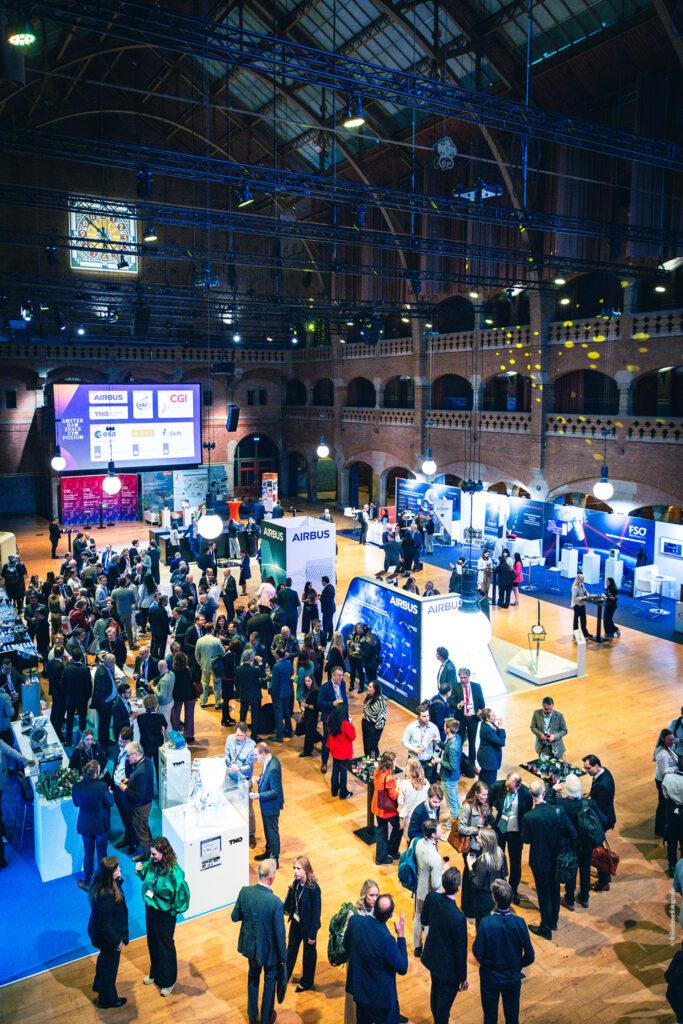
An exhibition area ran alongside the conference sessions across two halls of the Beurs van Berlage, where companies, research organisations and public institutions presented technologies and services from across the space sector.
Exhibitors included organisations such as Airbus, TNO, CGI, NLR – Netherlands Aerospace Centre, NL Space Campus, S[&]T, ISISPACE, FSO Instruments, Dawn Aerospace and Starion, alongside technology developers including Nextage, Spherical, Lens R&D, Axient Systems, cosine, Viasat and Technolution. The European Space Agency also hosted a stand within the exhibition space.
The exhibition areas remained open between sessions, allowing participants to move between conference rooms and company stands throughout the day while exploring developments in satellite hardware, sensing technologies, communications systems and downstream data applications.
A space for the next generation
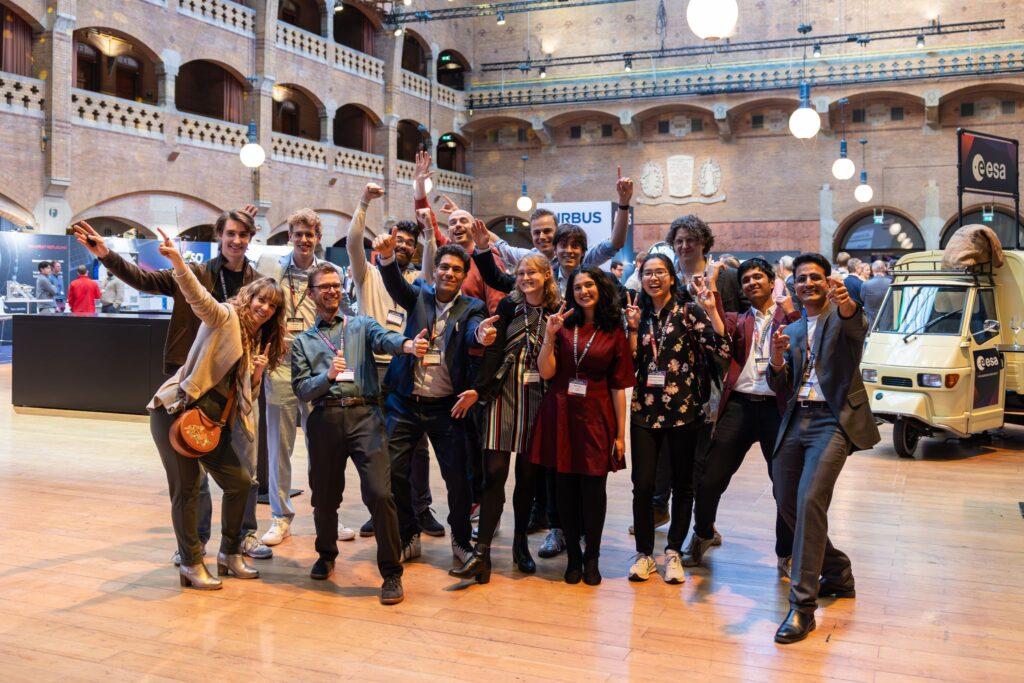
Alongside the main programme, the symposium also included activities dedicated to young talent. Under the Space for Talent track, work sessions explored topics such as sustainable space propulsion and the use of satellite data to monitor biodiversity, accompanied by talk-show style discussions on whether space technology can contribute to biodiversity protection. Talent-focused activities around the symposium also included Champions of X Change, which provided a separate platform focused on visibility, leadership and career development in the wider space and technology community.
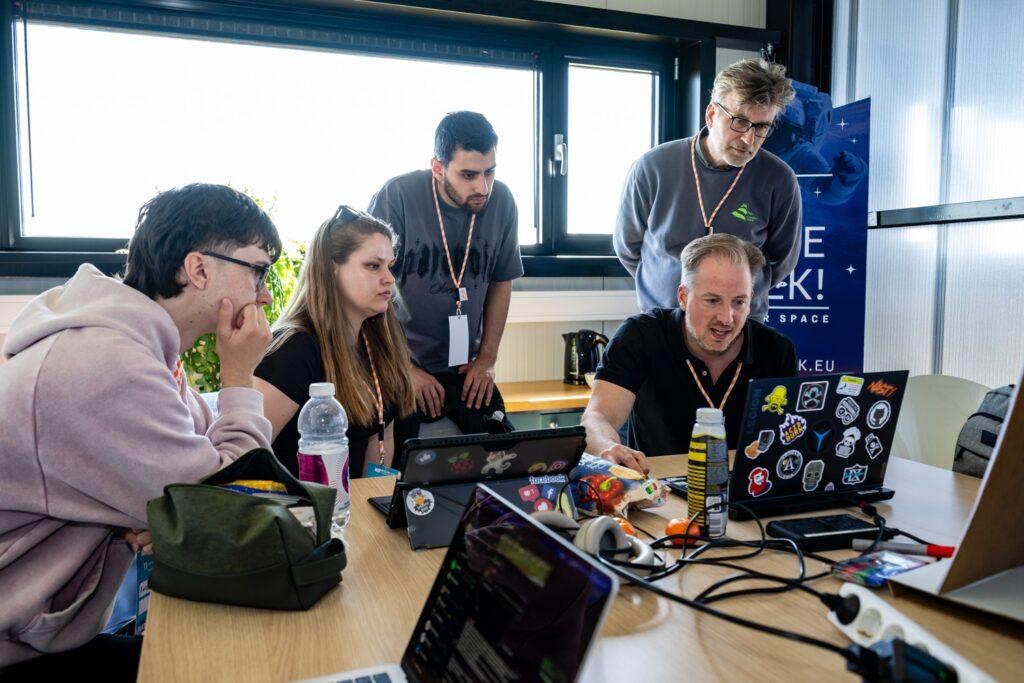
A student Talent Challenge invited participants from TU Delft Aerospace Engineering, TU Delft Civil Engineering and Geosciences, and Inholland University of Applied Sciences to explore how spectro-polarimetry could be used to monitor biodiversity from space. Students were asked to develop concepts for a potential satellite mission or sensor that could be realised within five years. During the challenge, teams presented their ideas to experts from TU Delft, Leiden University, Erasmus University and SRON, as well as industry representatives present at the symposium, including TNO and Airbus. The exercise produced several mission concepts for spectro-polarimetric observation of vegetation, with Team Green receiving recognition for a concept using spherical polarimetry to identify plants with medicinal value.
Launch of the Netherlands Space Agency
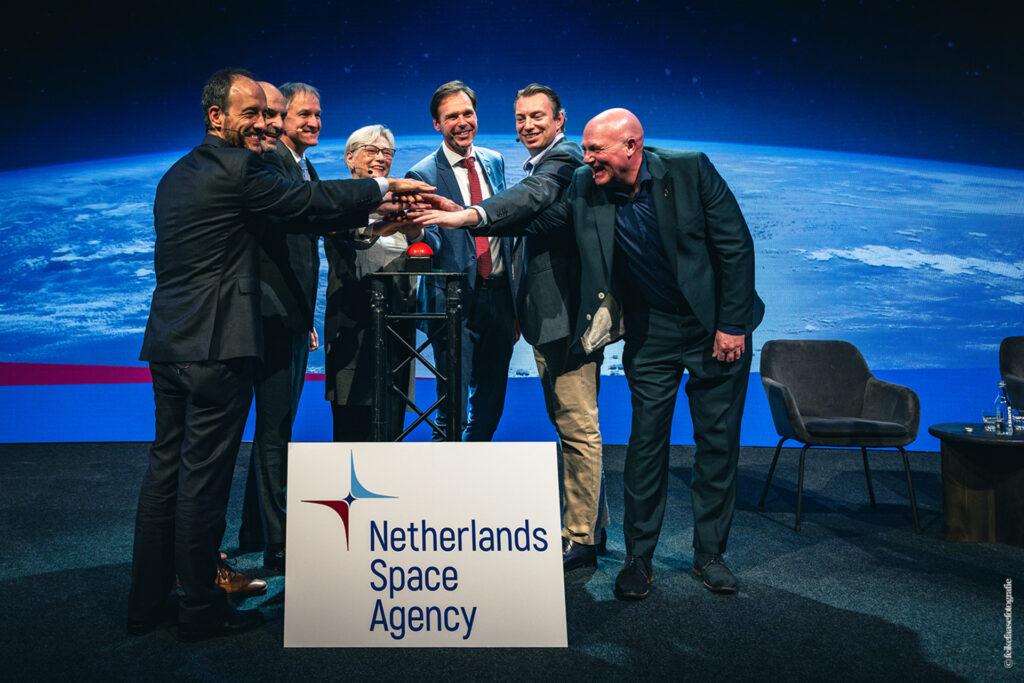
The symposium also hosted the official launch of the Netherlands Space Agency (NLSA), marking the transition from the Netherlands Space Office to a national agency. The announcement took place during the stage programme on the first day of the event.
The session was opened by Sandor Gaastra, Secretary-General at the Dutch Ministry of Economic Affairs, and included remarks from Harm van de Wetering, Director of the Netherlands Space Agency. Contributions during the session also came from Maria van der Hoeven, Rodrigo da Costa (EU Agency for the Space Programme), Dietmar Pilz (European Space Agency), Jeroen Rotteveel (SpaceNed) and astronaut André Kuipers. The discussion was moderated by science journalist Anna Gimbrère.
The change from the Netherlands Space Office to the Netherlands Space Agency reflects the evolving role of space infrastructure in areas such as navigation, communications, security and environmental monitoring.
Dutch space organisations sign Zero Debris Charter
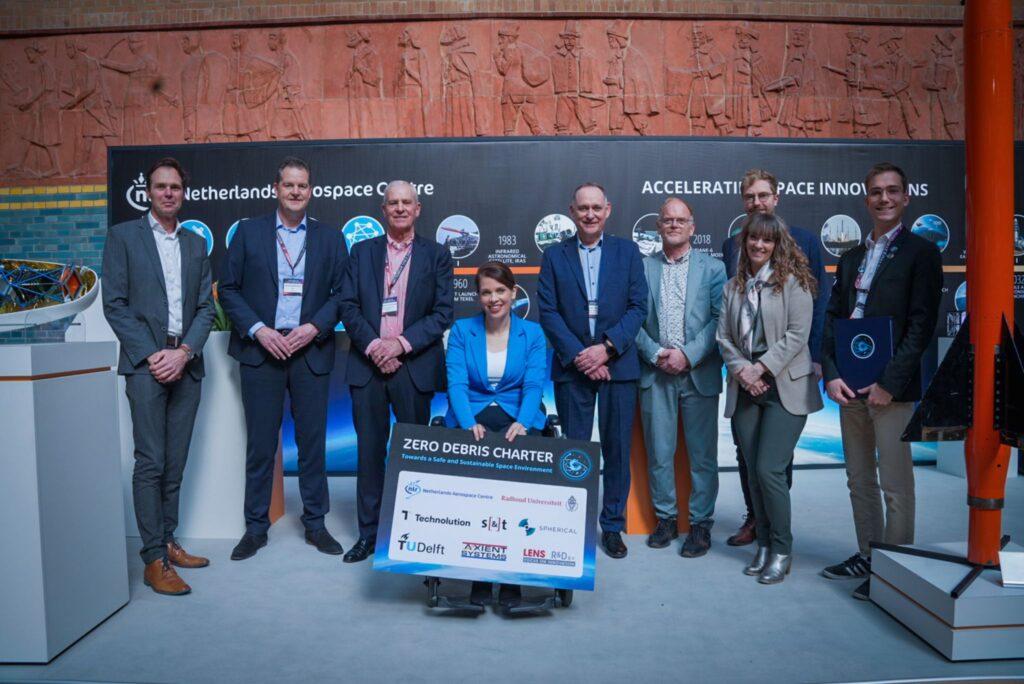
A signing moment during the second day of the symposium focused on space sustainability. Representatives from several organisations in the Dutch space ecosystem signed the Zero Debris Charter, an initiative promoted by the European Space Agency that encourages responsible behaviour in orbit and aims to limit the creation of new space debris.
Organisations signing the charter during the event included S[&]T, NLR – Netherlands Aerospace Centre, TU Delft Aerospace Engineering, Lens R&D B.V., SPHERICAL, Axient Systems B.V. and Technolution.
The initiative encourages signatories to work towards limiting debris generation and supporting the long-term sustainability of orbital operations as the number of satellites in space continues to increase.
EU Space Act enters the discussion
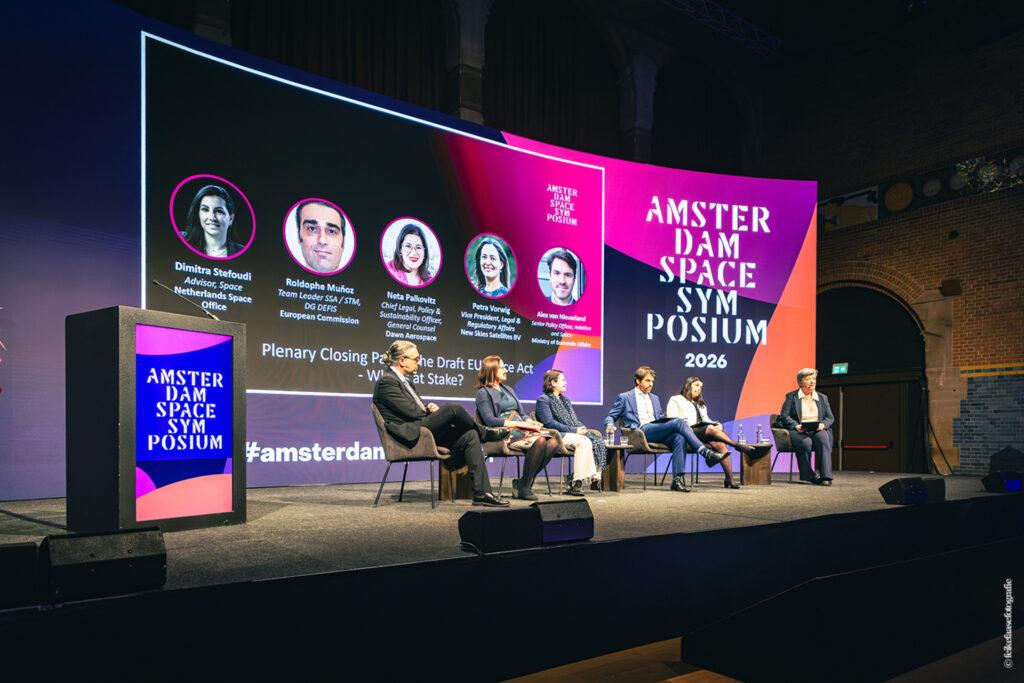
The draft EU Space Act was addressed during the closing panel of the symposium. Presented by the European Commission in 2025, the proposal aims to establish a common regulatory framework for space activities across the European Union. The discussion featured Tanja Masson-Zwaan (Leiden University), Rodolphe Muñoz (European Commission), Alex van Nieuwland (Dutch Ministry of Economic Affairs), Dimitra Stefoudi (Netherlands Space Agency), Petra Vorwig (New Skies Satellites) and Neta Palkovitz (Dawn Aerospace).
The proposal focuses on three areas: safety, resilience and sustainability, addressing topics such as space debris mitigation, protection of space infrastructure and environmental aspects of space activities. Questions raised during the discussion included how the regulation could apply to operators providing services in the EU market and how an EU-level framework might interact with existing national licensing systems.
Looking ahead to the next edition
In his closing remarks, Jeroen Rotteveel, Chairman of SpaceNed and CEO of ISISPACE, thanked the speakers, partners, sponsors, exhibitors and organising teams who contributed to the two-day programme.
Rotteveel briefly hinted that the Amsterdam Space Symposium may return in a future edition, suggesting that the initiative is expected to continue following its first gathering in Amsterdam. Further details, including the timing of a future edition, are expected to be announced at a later stage.